When Every Second Counts,
Send the Swarm.
Instead of one expensive drone searching alone, we send a team of small, smart drones. They fly on their own, search together, and build a map to help rescuers find people faster.
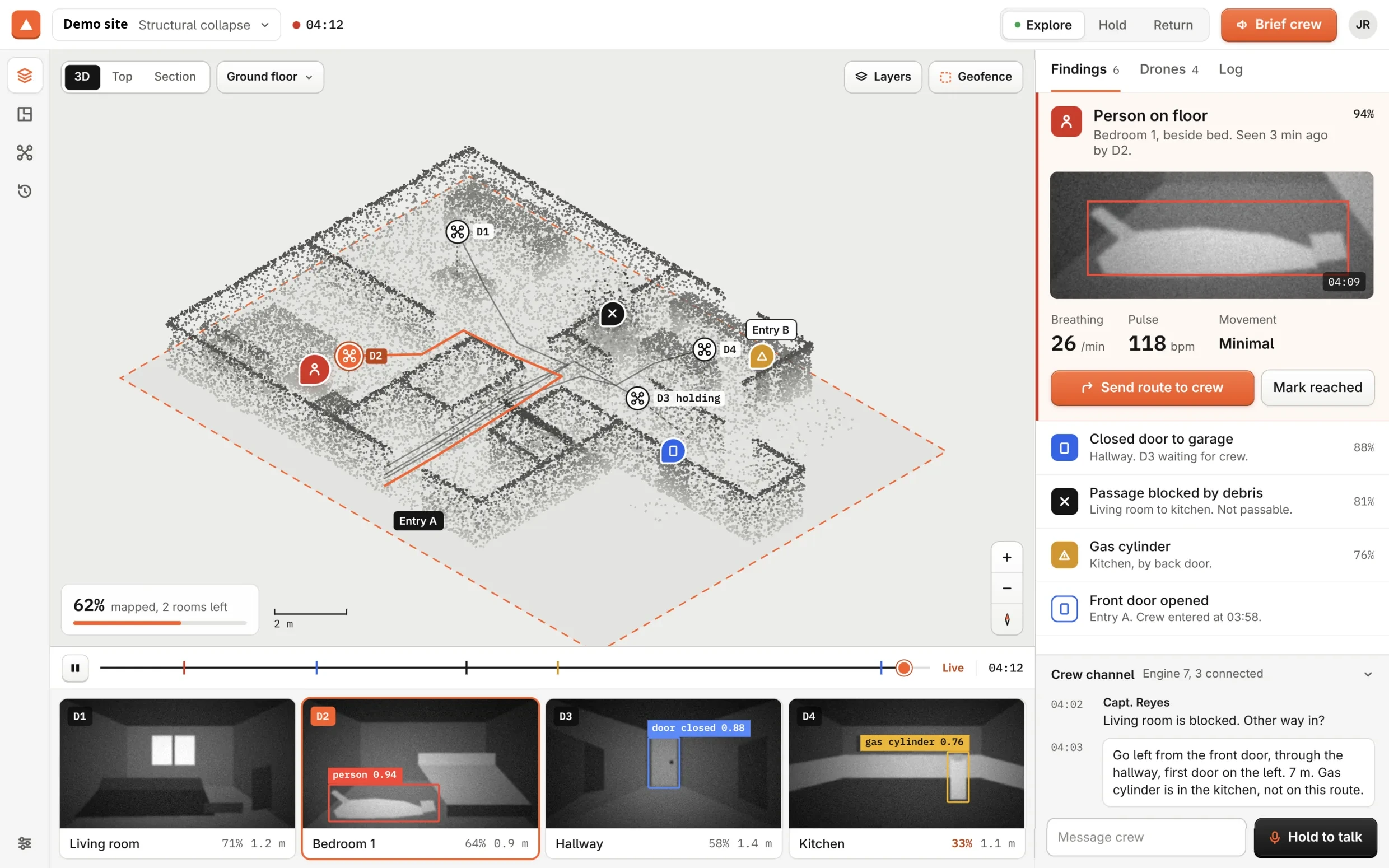
One drone searches room by room. The swarm splits up.
Same house. Same moment.
Illustration of the idea, not a measured result.
Together, they build one map.
- 1Each drone takes a room.Four small drones fly in and split up.
- 2What they see joins one map.
- 3People and dangers get marked.
- 4Rescuers hear the way in.
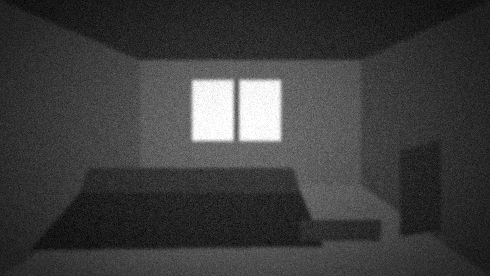 D1
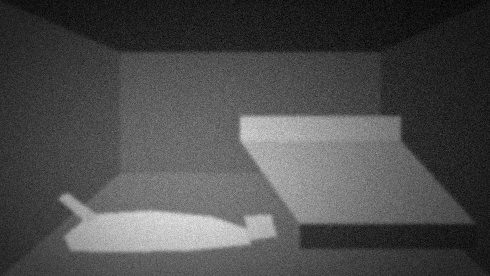 D2
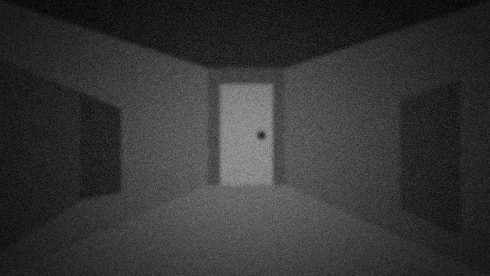 D3
 D4
It checks on people, too.
When a drone finds someone, it reads their pulse from the camera.
Rescuers just listen.
It talks to the crew through their earpiece, so their hands stay free. They can ask questions out loud and get answers from the live map.
- MayflyPerson found in the bedroom. They're waving.
- Capt. ReyesWhat's the fastest way to them?
- MayflyFront door, then left. About 7 meters. The gas tank is in the kitchen, not on this route.
- Capt. ReyesHallway's blocked.
- MayflyGot it. Go through the living room instead. The new route is on the map.
- Example conversation.
Faster.
Many drones search at once, instead of one drone searching everything. More drones, more rooms checked at the same time.
Cheaper.
Lots of small, low-cost drones share one powerful computer, instead of one very expensive drone. That could make searching more affordable.
Autonomous.
The drones fly and explore on their own. Rescuers don't have to steer each one.
Spend your minutes saving people.
Not searching for them.
The swarm finds the people and the dangers in a building at the same time, so your crew can decide who to reach first and go straight there.
See everyone at once.
Every person and every danger in the building, on one map.
Choose who to reach first.
Your crew sets the order. The swarm keeps the picture current.
Go in knowing what's there.
Fewer surprises behind closed doors.
Honest about what it can't do.
Not for heavy smoke
Cameras need light. We built for collapses, earthquakes and welfare checks first.
Estimates, not diagnoses
Pulse readings come with a confidence and never replace a medic.
A person stays in charge
The incident commander approves routes and can stop every drone at any time.
Run a drill with your crew.
We bring four drones and the edge box to your training building. Two hours, no cost.